
Dissertation Ruminations, Pt. VI
Summa Theologiae IIIa q. 34, a. 4; Excerpt from Chapter I on St. Thomas’ Treatment of the Beatific Vision in Christ

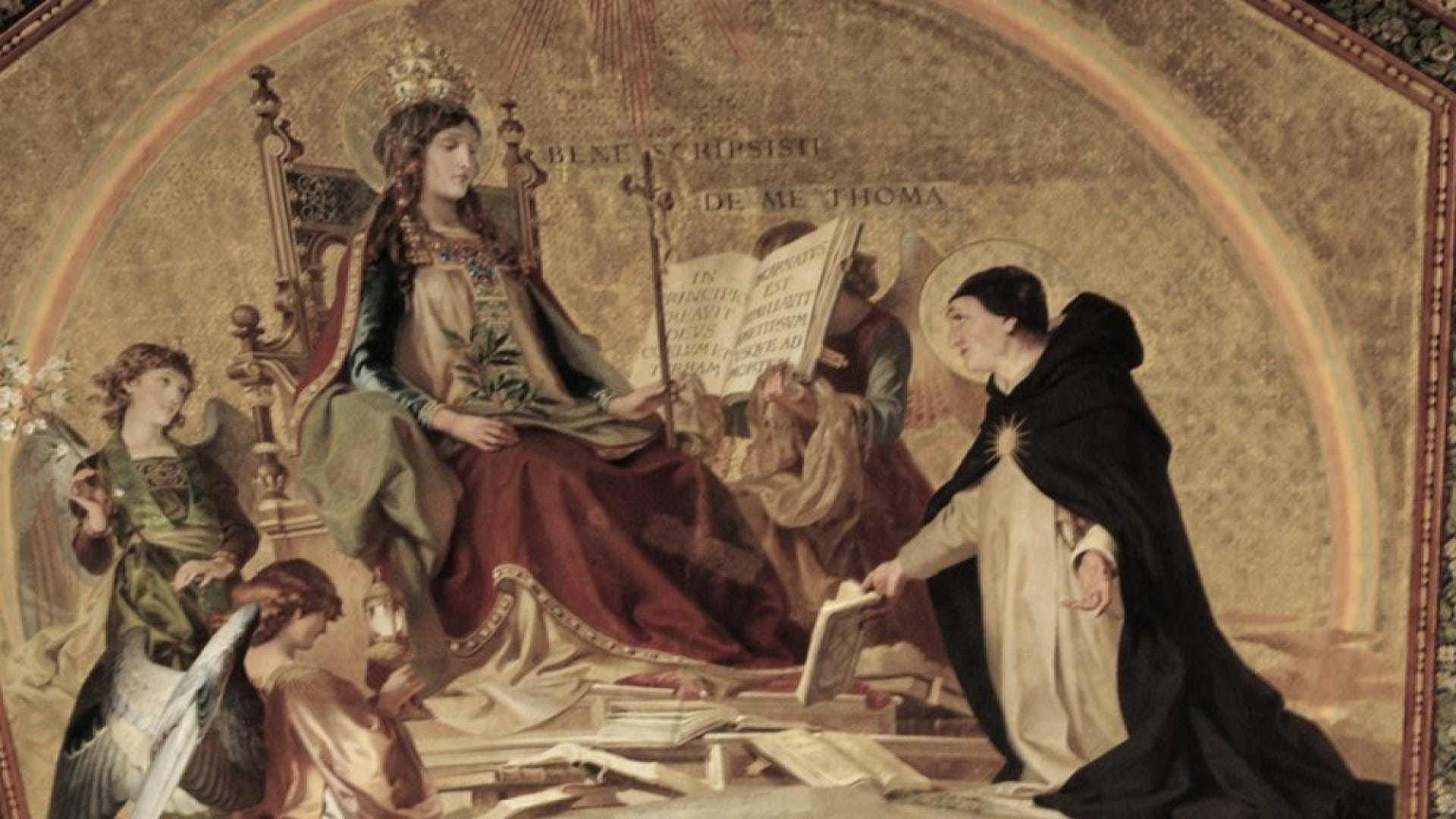
I have been asked to publish some of my dissertation on the beatific vision in Christ as the principle of the vision of the elect and subsequent deification. I will post pieces of it over time for those interested in my research. I have done very little to clean this up from its original submission and have not added further explanations. This is just offered for the interest of the few who may find it edifying. I reserve the right to publish the entirety of the text at a future date, in which case, this series may need to come down.
Question 34, Article 4
Finally, we come to the last article to be considered in the Summa concerning the beatific vision in Christ. This one comes to us from Question 34 regarding the perfection of the Christ Child conceived in the womb of the Blessed Virgin. In the fourth article of this question, Thomas considers the question of whether Christ was a perfect comprehensor in the first instant of His conception. Thomas has already firmly established that the human soul of Christ did, indeed, enjoy the beatific vision and that the degree of enjoyment on the part of Christ’s soul was most perfect of all creatures. This last question considers the moment at which that vision began.1
To this question, there are three objections. The first two objections both consider the beatific vision as a reward and the need to merit the reward in order to receive it. The first considers it as temporally successive to merit. The first objection reads, “For merit precedes reward…. But Christ merited in the first instant of His conception. Since, therefore, the state of comprehension is the principal reward, it seems that Christ was not a comprehensor in the first instant of His conception.”2 Here, the objector is making a distinction between the moment in which the soul of Christ merited to enter the beatific vision, that is, at the first moment of conception, and separating it from receiving the reward of that merit, that is, to become a comprehensor. This evidently would have taken place after the first moment, though the first objector does not indicate when. However, the second objector gives a more substantial timeline. The second objection cites the Gospel of Luke, “Was it not necessary that the Christ should suffer these things and enter into His glory?”3 Where the first objection does not indicate when the human soul of Christ would have merited the beatific vision, the second objection claims that it was after he suffered since “glory belongs to the state of comprehension.”4 If we combine these two thoughts, it seems that the humanity of Christ began to merit at the moment of conception, but did not gain the reward for that merit until after He suffered. The third objection cites human nature in general and says that it is not in accord with human nature to constantly be in the state of beatitude. The reasoning is given as, “…for if they had been created in beatitude, they would not have sinned afterwards.”5
To begin the Sed contra section, Thomas considers an argument from the Gloss on Psalm 64, “Blessed is he whom Thou hast chosen, and taken to thee; which words, according to the gloss, refer to Christ’s human nature, which was taken by the Word of God unto the unity of Person.”6 The argument references the Hypostatic Union here to explain that the human nature of Christ was taken up into the person of the Word.7 This assumption of a human nature immediately results in a unity in the person of Christ of the divine nature and the human nature. This happened at the very first moment of conception, and so Thomas says, “Therefore, in the first instant of His conception, Christ, as man, was in the state of beatitude, which is to be a comprehensor.”8 Thomas holds that there is no lapse of time between the assumption of the human nature and the human soul of Christ being beatified.9
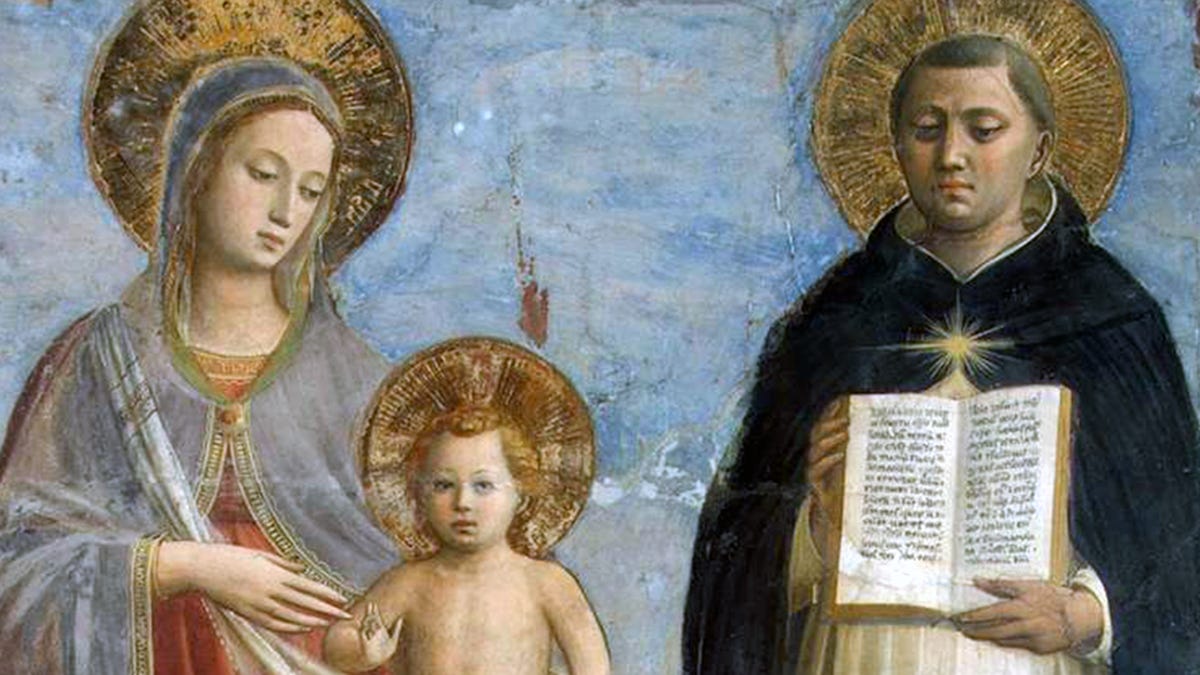
Turning to the Respondeo section, Thomas makes recourse to Christ being sanctified by grace in the first instant of His conception. He begins, “As appears from what was said above, it was unbecoming that in His conception Christ should receive merely habitual grace without the act.”10 Thomas is referring to article three of the present question, in which he addresses the sanctification of the soul by grace in view of an act of faith.11 This act is either a personal act where someone, with the use of free will, can will to choose God, like an adult, or it is chosen on their behalf, as a parent does for their infant.12 This sanctification that happens is in consideration of the act of choosing God. Thomas says that the former is more perfect than the latter, as in, it is more perfect to choose God for yourself than it is for it to be done on your behalf. In arguing this, St. Thomas returns to an argument ex convenientia. He says that it is “unbecoming” (Latin: non fuit conveniens) of Christ to receive habitual grace without an act of free will. Here, St. Thomas is advocating that it is most fitting for Christ to have willed to receive grace as opposed to it being willed for Him, as it is in accord with His perfection as the Son of God. Thomas concludes, “Since, therefore, the sanctification of Christ was most perfect, because He was so sanctified that He might sanctify others; consequently, He was sanctified by reason of His own movement of the free will towards God.”13 At the first instant of His conception, Christ was able to freely choose His movement toward God and thus be sanctified in the womb in that instant.14 Now, this grace that He was sanctified with is the most perfect grace that can be given to man, as is said in the Gospel of John.15 Thomas takes what was said in article three and applies it here:
But the grace of the wayfarer, being short of that of the comprehensor, is in less measure than that of the comprehensor. Wherefore it is manifest that in the first instant of His conception Christ received not only as much grace as comprehensors have, but also greater than that which they all have. And because that grace was not without its act, it follows that He was a comprehensor in act, seeing God in His Essence more clearly than other creatures.16
God pours out on Christ the fullness of grace, i.e., grace without measure, and that grace must be greater than the wayfarer. As was said in a previous section, the comprehensor is the completion of the wayfarer, for the comprehensor sees that which the wayfarer desires to see. Now, this grace which God has given to Christ is not without act, as was said in article three, the human soul of Christ wills to be united to God in all things, and thus His sanctification through grace is done by virtue of this free will act towards God. Further, it is necessary that this grace of sanctification be perfect, as it is impossible for Christ to increase in merit.17 Thus, John the Evangelist says of the Word made flesh that He has the fullness of grace. Thomas determines that this fullness of grace necessitates that just as His sanctification is on the merit of His free act, so too is the human soul of Christ a comprehensor in act. This all happens at the first instant of conception, when the Word is made flesh to dwell among us.
Matthias Scheeban comments, “With regard to the reasons on which the comprehensive perfection of Christ’s created knowledge is based, it is also certain that this knowledge had been communicated to His soul from the beginning, as early as His conception…” Matthias Joseph Scheeban, Handbook of Catholic Dogmatics Book Five: Soteriology, Part II: The Work of Christ the Redeemer and the Role of His Virgin Mother, (Steubenville, OH: Emmaus Academic, 2021) 33. Emphasis is mine.
ST IIIa q. 34, a. 4.
Luke 24:26.
ST IIIa q. 34, a. 4.
ST IIIa q. 34, a. 4.
ST IIIa q. 34, a. 4.
In chapter four, I will dedicate a section to exploring the Hypostatic Union, as this teaching is imperative to understand in order to grasp the theology of Thomas on the beatific vision. It suffices for now, the teaching on the hypostatic union is that the Divine Person of the Word assumed a human nature unto Himself. This explains the citation by Thomas, that human nature was taken up into the Divine Person, and there was a unity in person.
ST IIIa q. 34, a. 4.
Matthias Scheeban comments, “Finally, the very nature of the think implies that the auctor et consummator fidei, ‘the author and finisher [perfecter] of faith’ (Heb. 12:2) Himself could not walk in the darkness of faith or of a still imperfect knowledge, and that the supreme Teacher, in whom God Himself speaks to us and appears to us, could never be excluded from the vision of God…” The Work of Christ, 36-37. Emphasis is Scheeban’s. It is important to focus in on the use of the phrase, “never be excluded from the vision of God.” Scheeban certainly follows St. Thomas in saying that there is never a time when Christ is excluded from this vision, which includes all the way back to His conception. Following Scheeban, we cannot admit any time when Christ did not have the vision of God.
ST IIIa q. 34, a. 4.
This should also be considered under the idea of increasing in holiness. Christ did not increase in holiness as Garrigou-Lagrange says, “If he did not have the beatific vision from the beginning of His existence, He would have very much increased in holiness, by passing from the state of faith and of wayfarer to that of vision, and to the final state of glory in heaven.” Christ the Savior, 353.
Cf. ST IIIa q. 34, aa. 1 and 3.
ST IIIa q. 34, aa. 1 and 3.
Garrigou-Lagrange comments here, “The Fathers likewise in various ways affirming that Christ did not increase in holiness, implicitly teach that He was from the beginning of His existence both comprehensor and wayfarer, which we find afterward is the common teaching, especially since the twelfth century.” Christ the Savior, 353. By “beginning of His existence” Garrigou means the beginning of His human existence, i.e., from the first moment of His conception.
Cf. John 1:14.
ST IIIa q. 34, a. 4.
Cf. ST IIIa q. 34, a. 3.
Adam and Eve were created free from the law of sin without having to choose God. There is no reason why Jesus would have to be like the rest of us. He didn’t need to choose a movement toward God.
His biological makeup couldn’t have only come from Mary with what we know today about DNA and chromosomes. His blood needed a male contribution to even exist. The fact that Jesus is a man makes evident that the Father had to do some creating for Jesus to be conceived.