
Dissertation Ruminations
Summa Theologiae IIIa q. 9, a. 2

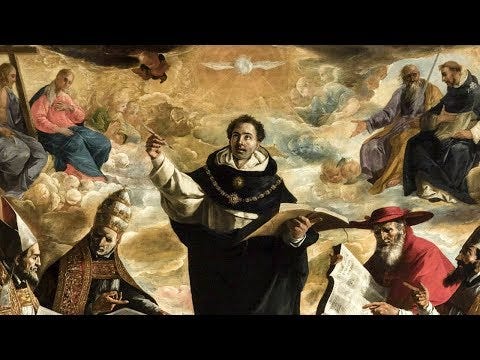
I have been asked to publish some of my dissertation on the beatific vision in Christ as the principle of the vision of the elect and subsequent deification. I will post pieces of it over time for those interested in my research. I have done very little to clean this up from its original submission and have not added further explanations. This is just offered for the interest of the few who may find it edifying. I reserve the right to publish the entirety of the text at a future date, in which case, this series may need to come down.
Regarding the beatific vision in Christ, we will turn to the Tertia pars of the Summa. It is in this part that Thomas addresses the great mysteries of Christological theology. Thomas almost certainly began composing the Tertia pars while at Paris in 1271 and continued until his vision in 1273.1 While the entirety of the Tertia pars was not finished, Thomas did complete the section on Christ, and so, for this present work, we can turn to the Tertia pars for Thomas’ final thoughts on the beatific vision in Christ. I will consider what Thomas says in Article 2 of Question 9, as well as all four articles in Question 10. I will end this section with a consideration of article four of Question 34, in which Thomas addresses the beatific vision in Christ at the moment of His conception. To aid in the analysis of each article, I will turn to the great 20th-century Thomist, Fr. Reginald Garrigou-Lagrange, and his excellent Commentary on the Summa.2
Question 9, Article 2
Question 9 of the Tertia pars addresses the types of knowledge in the person of Jesus Christ. Thomas gives four types of knowledge in Christ: Divine, beatific, infused, and acquired. Question 9 is a general discussion of each of these. Beatific knowledge is addressed in the second article under the question, “Whether Christ had the knowledge which the blessed or comprehensors have?”3 Against this thesis, Thomas lists three objections. The first objection cites Christ as having the Godhead and thus not participating in Divine Light. The objection denies the knowledge of the blessed in Christ because, “For the knowledge of the blessed is a participation of Divine Light according to Ps. 35:10. Now Christ had not a participated light, but He had the Godhead Itself substantially abiding in Him.”4 Here, the objector is citing the nature of the blessed in heaven. Their knowledge of God through the beatific vision is a knowledge gained through participation in the divine. God is the principle of their knowledge, and thus the knowledge of the blessed is given to them like a light that illumines an area. It is by this ‘Divine Light’ that they come to know. For the objector, Christ, who is God and a person of the Godhead, cannot participate in that same Godhead, and thus, could not have the knowledge of the blessed. Simply, beatific knowledge is only gained by participation, and Christ cannot participate in the principle of that knowledge since He is substantially united to the Godhead.
The second objection considers Christ Himself as blessed and not needing the beatific vision to be a part of the blessed: “Further, the knowledge of the blessed makes them blessed… But this Man was blessed through being united to God in person… Therefore, it is not necessary to suppose the knowledge of the blessed in Him.”5 In this objection, the principle of the blessedness in Christ is found solely in the Hypostatic Union. While the term ‘Hypostatic Union’ is not used, it can certainly be inferred. The objector cites the ‘Man’ being united to God in His person. That is to say, the human was united to the divine. St. Thomas’ reasoning used here is to say that the humanity of Christ was made blessed by virtue of the uniting of the human to the divine, and that there is no vision that imparts the character of blessedness on the human soul of Christ.
The third objection has two parts to it. The second part builds upon the first. The first part cites that beatific knowledge is a supernatural knowledge that does not naturally reside in humans. The second part returns to the idea that since in Christ there is divine knowledge, there is no need for beatific knowledge. To the first, the objector says, “Further, to man belongs a double knowledge– one by nature, one above nature. Now the knowledge of the blessed, which consists in the vision of God, is not natural to man, but above his nature.”6 This is certainly a true statement. Man does not naturally see the beatific vision by his own power. If that were the case, then there would not be any sin in the world, and there would not have been a need for the redemptive act. The beatific vision is a supernatural knowledge that is given to man by God. The objector is applying this to Christ; that since He is human, then He would not naturally have the beatific vision. The objector then builds upon this by saying, “But in Christ there is another and much higher supernatural knowledge, i.e., the Divine knowledge. Therefore, there was no need of the knowledge of the blessed in Christ.”7 And thus we get to the conclusion of this objection: Christ does not have the knowledge of the blessed by nature, and further, He does not need it to be given to Him supernaturally since He has divine knowledge naturally according to His divine nature.
In the Sed Contra section, Thomas cites John 8:55. He says:
The knowledge of the blessed consists in the knowledge of God. But He knew God fully, even as He was man, according to John 8:55: I do know Him, and do keep His word. Therefore, in Christ there was the knowledge of the blessed.8
Thomas is concentrating on the subject of knowledge. In this passage from the Gospel of John, Christ is speaking to the Pharisees and chastising them for their hypocrisy, citing His own knowledge of the Father being far and above their own.9 I will treat this passage in greater detail in chapter four of this work. For now, I want to turn to Thomas’ commentary on John to give some explanation to the Sed Contra. “He says: I know that I have glory from God the Father, because I know Him, namely, with that knowledge with which he knows Himself; and no one else except the Son knows Him… with a perfect and comprehensive knowledge.”10 Here, Thomas speaks of the knowledge that the Son has of the Father; this is a knowledge that is the same as the knowledge with which He knows the Word, that which is called beatific. He further qualifies this knowledge as that which is perfect and comprehensive.
The term comprehensive that is being used here is important. Thomas uses the terms wayfarer and comprehensor to distinguish between those who are moving toward the beatific vision (wayfarer) and those who have attained it (comprehensor).11 He uses comprehensor to indicate that the soul that is beholding God is comprehending God to its fullest capabilities.12 Thomas says of Christ, “Now before His passion, Christ’s mind saw God fully, and thus He had beatitude as far as it regards what is proper to the soul…”13 As we will see in the Respondeo section of Question 9, Article 2, the soul of Christ beholds or comprehends the vision of God more perfectly than any other comprehensor. This is the knowledge that is perfect and comprehensive.
Returning to question nine, Thomas begins his Respondeo section by considering the human soul and its potency to receive the vision of God. He says:
Now man is in potentiality to the knowledge of the blessed, which consists in the vision of God; and is ordained to it as to an end; since the rational creature is capable of that blessed knowledge, inasmuch as he is made in the image of God.14
The soul of man is created by God to be ordered toward the beatific vision. The rational creature is able, insofar as God has created it in His image, to be acted upon by God to see God in His essence. This is what is referred to as the knowledge of the blessed. Thomas establishes that man is made for this glory as he is “ordained to it as to an end,” and that end is ordained by grace. Thomas then makes the connection to Christ Himself, “Now men are brought to this end of beatitude by the humanity of Christ, according to Heb. 2:10…”15 According to Thomas, Christ is the principle by which man can enter beatitude. This is chiefly done in two ways. The first is by the redemptive act itself.16 Christ died that man might be able to attain heaven and, by virtue of that, receive the beatific vision. The second is what Thomas concludes this present section with, “And hence it was necessary that the beatific knowledge, which consists in the vision of God, should belong to Christ pre-eminently, since the cause ought always to be more efficacious than the effect.”17 Thomas is identifying the beatific vision in Christ as being the cause of man’s own beatific vision. Garrigou-Lagrange comments very beautifully on this:
He is the supreme Master, of unique and incomparable authority. Thus, with the greatest simplicity He enlightens the mind, fills the heart with holy joy, and efficaciously moves the will to upright and holy action. This preaching must come from the plentitude of most sublime contemplation.18
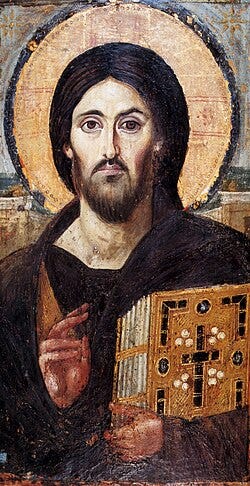
The work of redemption does not simply include the passion and death on the cross. It is a complete work that begins at the Incarnation with the assumption of the human nature into the person of Christ, it subsists in the beatific vision in Christ, and it is fulfilled through the self-immolation of Christ on the cross, resurrection from the grave, and ascension to the right hand of God. This will be developed more fully in chapter four. Christ’s ministry certainly culminates in the Paschal Mystery, but in all of the actions in the three years prior to it, Christ speaks to man on a human level the sublime truths that He contemplates in the beatific vision. Man’s salvation begins with the fruit of this vision in the teachings and examples which flow from it.
Thomas now moves on to the objections. To the first, Thomas makes a distinction between the Godhead being united to Christ in person, not in essence or nature. He says, “The Godhead is united to the manhood of Christ in person, not in essence or nature; yet with the unity of person remains the distinction of natures.”19 The Godhead, to which Christ belongs in His personhood, is not mixed with the human nature of Christ. The two natures in Christ do not mix with one another. They are united in the one person of Christ. This means that the human nature, though hypostatically united to the divine, is not divine itself, but is divinized as human nature within the beatific vision. Therefore, it “is perfected with the beatific knowledge whereby it sees God in essence.”20 This same idea is found in the reply to the second objection as well. The Hypostatic Union is the principle of the divine knowledge in Christ, properly speaking. This applies to his divine nature uniquely, though. Thomas says that it is necessary that created knowledge be given to Christ according to His created nature. This was to establish the last end in Him, “… it was necessary that there should be in the human nature of Christ a created beatitude, whereby His soul was established in the last end of human nature.”21 Just like all human beings, the human soul of Christ is established in the last end of man, that is, the full possession of the divine essence, to the fullness of their capability. Christ is ordered to the same end as all mankind.22
This extends into the reply to the third objection. It is in accord with man’s nature that he be ordered toward God. He cannot reach that end of his own power, though, and so Thomas says that the beatific vision is “to some extent above the nature of the rational soul, inasmuch as it cannot reach it of its own strength…”23 But Thomas does make a distinction here. While man cannot attain the beatific vision by himself, he is, nonetheless, able to attain it, through grace, given that he is created in the image of God, “… but in another way it is in accordance with its nature, inasmuch as it is capable of it by nature, having been made in the image of God.”24 Here, Thomas is showing that, in one way, beatific knowledge can be said to be supernatural to man, insofar as he cannot attain it himself. At the same time, it is natural for him, given that his nature is able to possess it when aided by the divine. On the other hand, the divine knowledge that is cited in the objection is always supernatural to man, and he is always unable to possess it. Therefore, the human soul of Christ can have beatific knowledge even though, in His divine nature, there exists divine knowledge.25
Torrell, Aquinas, Vol. 1, 147.
Fr. Garrigou-Lagrange was a Dominican priest who lived 1877–1964. He is one of the leading Thomists of the 20th century.
To begin his commentary on the article, Garrigou-Lagrange writes, “First of all, it must be noted that Catholic theologians consider as theologically certain the doctrine that Christ’s soul was free from all ignorance, that even from His conception He knew all things in the Word, which God knows by the knowledge of vision.” Christ the Savior, 343-344.
ST IIIa q. 9, a. 2.
ST IIIa q. 9, a. 2.
ST IIIa q. 9, a. 2.
ST IIIa q. 9, a. 2.
ST IIIa q. 9, a. 2.
Garrigou-Lagrange makes comment on this and other passages in the Gospel of John to support St. Thomas in saying, “What Christ preached as man, He knew as man, for human speech is the result of human intellectual knowledge; otherwise, the Word would take the place of the rational soul in Christ, which was the contention of Apollinaris. But as man, Christ declared what He saw with the Father and in the bosom of the Father. Therefore, Christ saw those things in the bosom of the Father, as man, and it is also said that He heard them, which properly belongs not to God inasmuch as He is God, but to man.” Christ the Savior, 351.
Thomas Aquinas, Commentary on the Gospel of John. Translated by Fr. Fabian R. Larcher, O.P. (Landor, WY: The Aquinas Institute for the Study of Sacred Doctrine, 2013) Ch. 8, Lecture 8, Section 1284.
See ST IIIa q. 15, a. 10.
It should be noted here that no created intellect can comprehend God perfectly according to God’s essence. A creature can only comprehend God insofar as the creature’s intellect allows them to. This is equally true for Christ whose human soul is created. Christ’s soul comprehended God to a more perfect degree than any other created intellect, however. See ST Ia q. 12, a. 7 for Aquinas’ treatment on the Divine Essence being comprehended. Further, we want to understand that Thomas’ use of the term comrehensio is defined as one who has attained the end. This is true for whoever possesses the vision.
ST IIIa q. 15, a. 10.
ST IIIa q. 9, a. 2.
ST IIIa q. 9, a. 2.
See IIIa q. 49, a. 5. The redemptive act will be given more attention in Chapter 4.
ST IIIa q. 9, a. 2. Garrigou-Lagrange comments on the overflow of grace that the human soul of Christ receives from the Word. This overflow is what makes the human soul of Christ most perfect and thus, it can be the principle of our own vision. Garrigou-Lagrange writes, “For the nearer any recipient is to an inflowing cause, the more it partakes of its influence, as already stated in discussing the fullness of habitual grace in Christ. But Christ’s human nature was untied personally to the Word of God. Therefore, it was supremely fitting for Christ as man, even in this life, to participate in this most perfect grace, which is the grace that is consummated by glory.” Christ the Savior, 359.
Christ the Savior, 357.
ST IIIa q. 9, a. 2.
ST IIIa q. 9, a. 2.
ST IIIa q. 9, a. 2.
Here, it also should be clarified that merely ordered to that end and attainment of that end are two different things. Not only is Christ’s humanity ordered toward the beatific vision, but it also has attained it. Garrigou-Lagrange comments, “Therefore, if Christ did not have the beatific vision, then He only believed in His divine nature and divine personality, just as the saints believe in the indwelling of the Most Holy Trinity in the souls of the just.” Christ the Savior, 258. Garrigou- Lagrange draws a comparison between the soul of Christ and the saints in that if the soul of Christ did not have the vision, He would have to have faith in His divine nature instead of having a direct vision of the Word. St. Thomas addresses the theological virtues in Christ in the Tertia Pars, see question 7. I will take up that discussion in chapter 4.
ST IIIa q. 9, a. 2.
ST IIIa q. 9, a. 2.
Just as above, St. Thomas says that the beatific vision in Christ is the cause of our own, this extends as well to final end of man. Christ must possess this end in order to lead others to it. Garrigou-Lagrange says as much, “It is de fide, both as to the ordaining of men to the beatific vision, and as to Christ’s influence as Savior on them, in bringing them to eternal life. Christ saint, ‘I am the way and the truth and the life.’ He is the way as man, and as God He is the truth and the life. Similarly, a text from St. Paul is quoted in this article, which says: ‘It became Him, for whom are all things, and by whom are all things, who had brought many children into glory, to perfect the author of their salvation, by His passion.’ For Him to bring men into glory, He most fittingly had it already in this life.” Christ the Savior, 355.
🌐 A Tapestry of the Annunciation 🧵🪡🩸🔥🪽
https://claude.ai/public/artifacts/d4bf54e9-9f82-479c-a6e4-f04f9d81147e
🎼⛪📖⏳📜🕊️🎵 Grace and peace to you! 📯
This is very edifying! It makes perfect sense that Christ would need to be given the beatific vision for His Body, the Church, to receive the same vision.